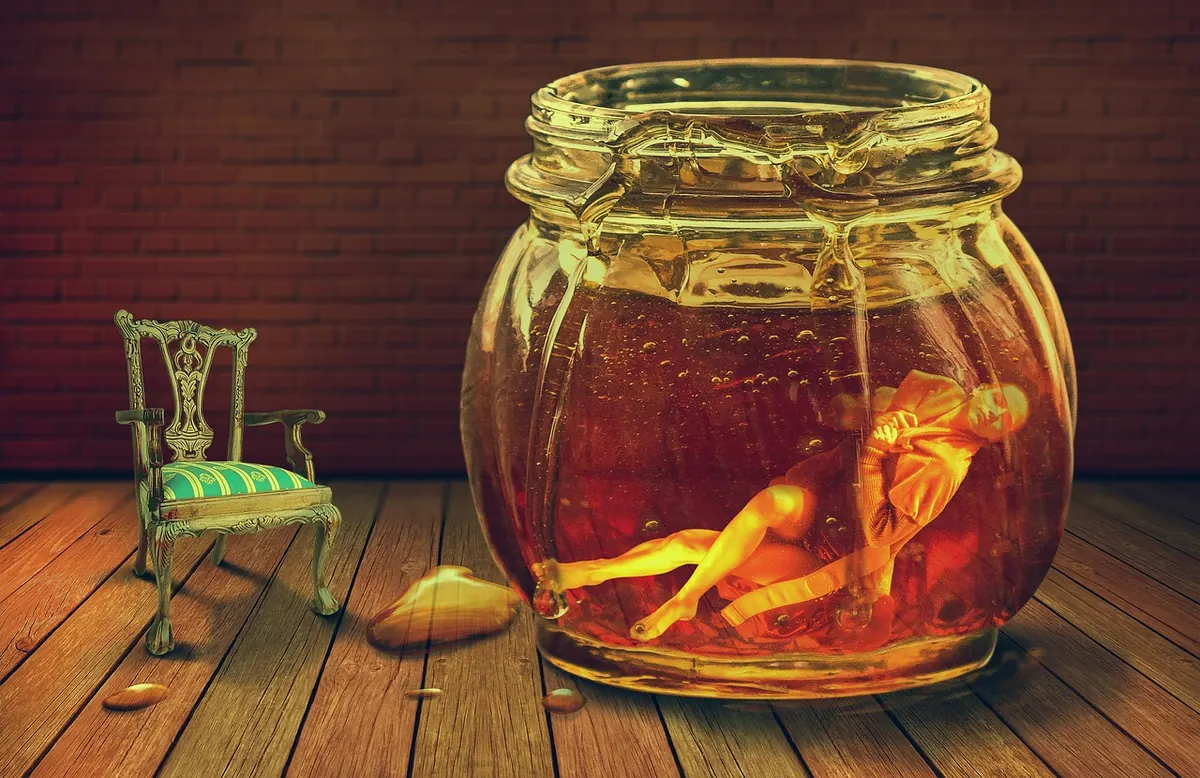
You reach for the honey jar, expecting the slow golden pour, and get a stiff, grainy paste instead. The spoon bends. There's a pale layer near the bottom and a thin syrup on top. It looks wrong, and your first instinct is that something has spoiled.
Nothing has spoiled. Crystallisation is simply what honey does. It's a physical change rather than a decay — the same sugar molecules rearranging themselves, not breaking down or going off — and in most cases it's the clearest sign you've bought the real thing. Honey that sits in a cupboard for five years without changing is usually the odd one out.
What's Actually Happening in the Jar
Honey is mostly two sugars — glucose and fructose — dissolved in a very small amount of water. That makes it a supersaturated solution: there is more sugar in the jar than the water could normally hold. Left to itself, the glucose starts to come out of solution and form crystals, which is arguably honey's natural, stable state. Fructose stays liquid, which is why a set jar often has a runny layer sitting on top.
Crystals need something to start on — a seed. In raw honey that might be a pollen grain, a speck of dust, an air bubble or a crystal that has already formed. Once one gets going, others build on it, and the jar sets from the inside out. That's why the first crystals usually appear at the bottom or around the edge of the glass, where the temperature shifts first, and why the whole jar seems to go solid almost overnight once it has begun.
The crystals are just sugar: flavourless, harmless and slightly gritty because of their size, not because anything has been added. Let one dissolve on your tongue and you'll notice it's simply honey, in a different arrangement. No additive, no contamination, no bacteria involved.
Why Some Jars Set in a Fortnight and Others Never Do
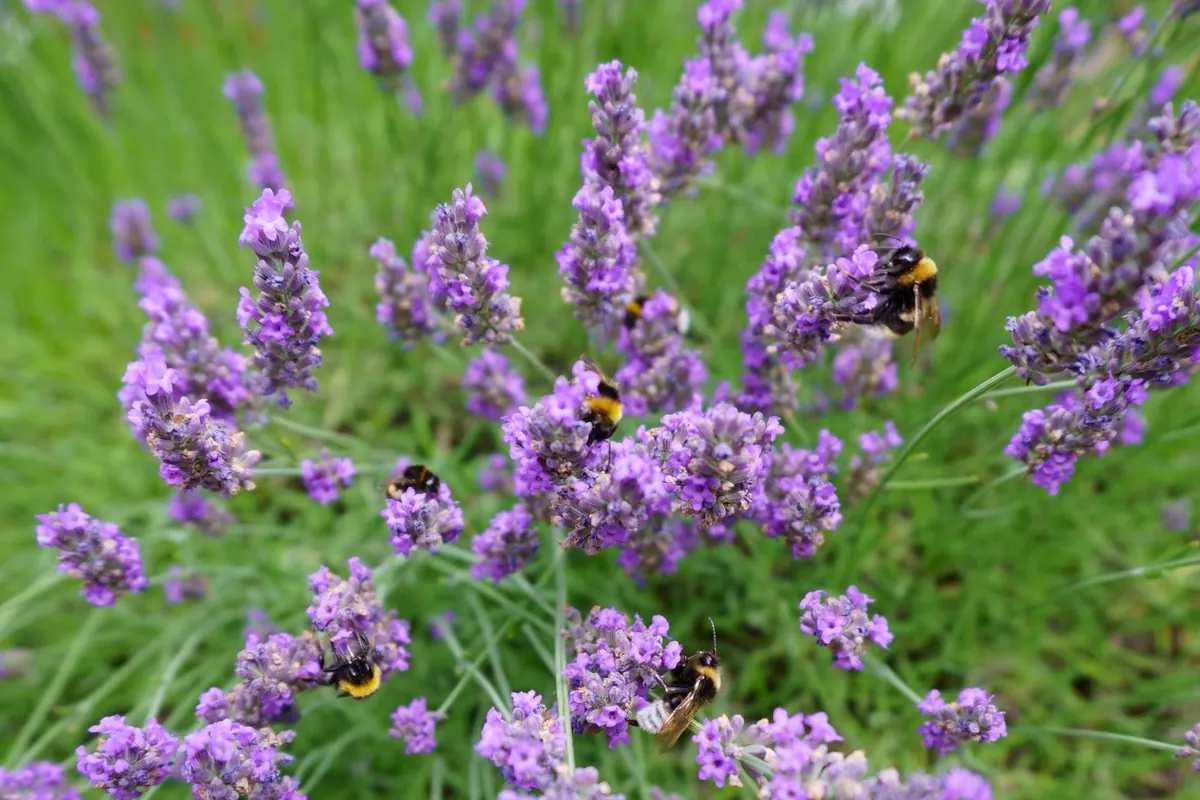
The biggest factor is the ratio of glucose to fructose, and that comes from the flowers the bees worked. Two jars bought from the same shelf on the same day can behave completely differently, simply because one came from a field of clover and the other from acacia blossom.
- Rapeseed (oilseed rape) honey is famously quick. It can go solid within days, and beekeepers working an oilseed crop often have to extract it before it sets in the comb.
- Clover, dandelion and most mixed wildflower honeys sit in the middle — weeks to months.
- Acacia, borage and honeydew honeys are high in fructose and can stay liquid for a year or more.
Temperature matters too. A cool pantry, or a garage hovering in the low teens Celsius, is close to ideal for crystal formation. A warm kitchen slows it down, and above roughly 25°C existing crystals begin to dissolve back into the liquid. Cold doesn't cause crystallisation, though a chilled jar will look cloudy and set quickly once it warms.
Handling counts as well. Fine filtering and heavy heating strip out the seed particles, which delays setting — but it also takes out pollen and aroma. Honey that has been gently warmed and poured into jars still holding its pollen will crystallise sooner. That is not a fault.
What a Set Jar Says About Your Honey
Honey that stays perfectly clear and pourable on the shelf for years has usually been heavily processed: ultra-filtered, or heated hard enough to destroy the nuclei crystals need. Some of that is done for convenience. Some of it is a way of disguising where the honey came from.
A jar that sets tells you three useful things:
- it hasn't been ultra-filtered to the point where nothing is left to start a crystal;
- it hasn't been blasted with heat long enough to strip out its pollen, enzymes and aroma;
- it most likely came from a real hive, with real nectar, rather than a blend of cheap imported syrups.
That isn't an automatic guarantee of quality — a badly kept raw honey can crystallise just as fast as a superb one — but between two jars at the same price, the one that sets is usually the one that was treated more gently.
Crystallisation isn't a flaw in honey. It's honey reverting to type.
How to Bring a Set Jar Back to Liquid
The fix is gentle heat and a little patience, nothing more.
- Sit the jar in a bowl of warm water — around 40–45°C, roughly a bath you'd be comfortable getting into. Never boiling.
- Leave it for ten to fifteen minutes, then stir. The crystals near the glass will melt first.
- Refresh the water and repeat until the honey runs clear. A stubborn jar can take half an hour.
- In a hurry, microwave in bursts of 10–15 seconds, stirring between each one and stopping the moment it liquefies.
- Once it's liquid, move it to a warm cupboard rather than a cold one, or it will simply set again.
What not to do: don't boil the jar, don't leave it on a radiator overnight where the glass can crack, and don't heat a plastic squeeze bottle for minutes on end. Excessive heat darkens the colour, flattens the aroma and destroys the enzymes that make raw honey interesting in the first place. You can repeat the warming process as often as you like — it does no harm at the temperatures above.
Storing It So It Behaves — and Using It If It Doesn't
Keep honey at room temperature, in a tightly lidded jar, in a cupboard that stays around 20–25°C. The fridge is the one place it shouldn't go: cold accelerates crystallisation, and honey keeps perfectly well without refrigeration. Always use a dry spoon, too. Honey pulls moisture out of the air, and a wet spoon or a loosely closed lid can push the water content high enough for wild yeast to wake up.
If that happens you'll know: the honey fizzes, smells faintly of alcohol or vinegar, and tastes sharp rather than sweet. That's fermentation, and it's genuinely spoiled — a completely different thing from crystallisation, which has no smell, no bubbles and no sourness.
Otherwise, don't fight it. Set honey is easier to measure by the spoonful, dissolves readily in tea or porridge, and works beautifully in marinades, salad dressings, glazes for roast carrots or stirred through yoghurt. Spread thickly on toast, it's arguably better than the runny version.
So next time you find a jar you can't pour, don't throw it out. Warm it gently, stir it, and use it. The crystals were never a warning sign — they were proof you got the real thing.
Photo: Septimiu / Pixabay