Walk through any British apiary and you will meet the same two hives: the squat National, familiar from every association site and auction, and the taller, wider Langstroth, borrowed from American commercial beekeeping. Ask ten beekeepers which is better and you will get ten confident answers, usually shaped by whatever they happened to start with.
The honest position is that both keep bees perfectly well in a UK climate. What really changes is the work around them: how much comb you handle, how heavy a box becomes by August, whether your extractor will take the frames, and how easily you can buy a spare brood box on a Saturday morning.
What Actually Differs
Strip away the brand loyalty and the differences come down to a handful of practical things.
- Frame size. A National brood frame is roughly 355 mm wide by 216 mm deep, with a 14×12 option that adds depth rather than width. A Langstroth deep frame is longer and deeper again, so each frame carries noticeably more comb.
- Box volume. A single National brood box is a snug fit for a strong colony, which is why so many beekeepers run double brood or 14×12. A Langstroth deep gives more room in one box.
- Bee space. Most Nationals are built with bottom bee space; many Langstroth boxes use top bee space. Mixing the two within one hive invites brace comb and burr, so keep each hive consistent.
- Availability. National parts are stocked by practically every UK supplier, appear constantly at auctions, and are interchangeable between neighbours. Langstroth kit is widely available too, often imported, but the second-hand market is thinner.
Brood Space and How the Colony Grows
Queens do not read catalogues, but they do respond to room. A prolific queen in a warm, well-fed colony will fill a single National brood box surprisingly fast, often by late spring. Once the brood nest is packed and the bees are backfilling with nectar, swarm preparations tend to follow. Beekeepers on Nationals learn to manage this with double brood boxes, a 14×12 brood box, or a disciplined routine of splitting and requeening.
Langstroth deeps delay that pinch point. There is simply more comb before the queen runs out of space, which suits strong colonies on heavy spring flows and beekeepers who would rather inspect fewer, larger boxes. The trade-off is real: more brood means more bees, and more bees mean more supers to add, more room to find the queen in, and more honey to extract at the end of it.
Frames, Inspections and Handling
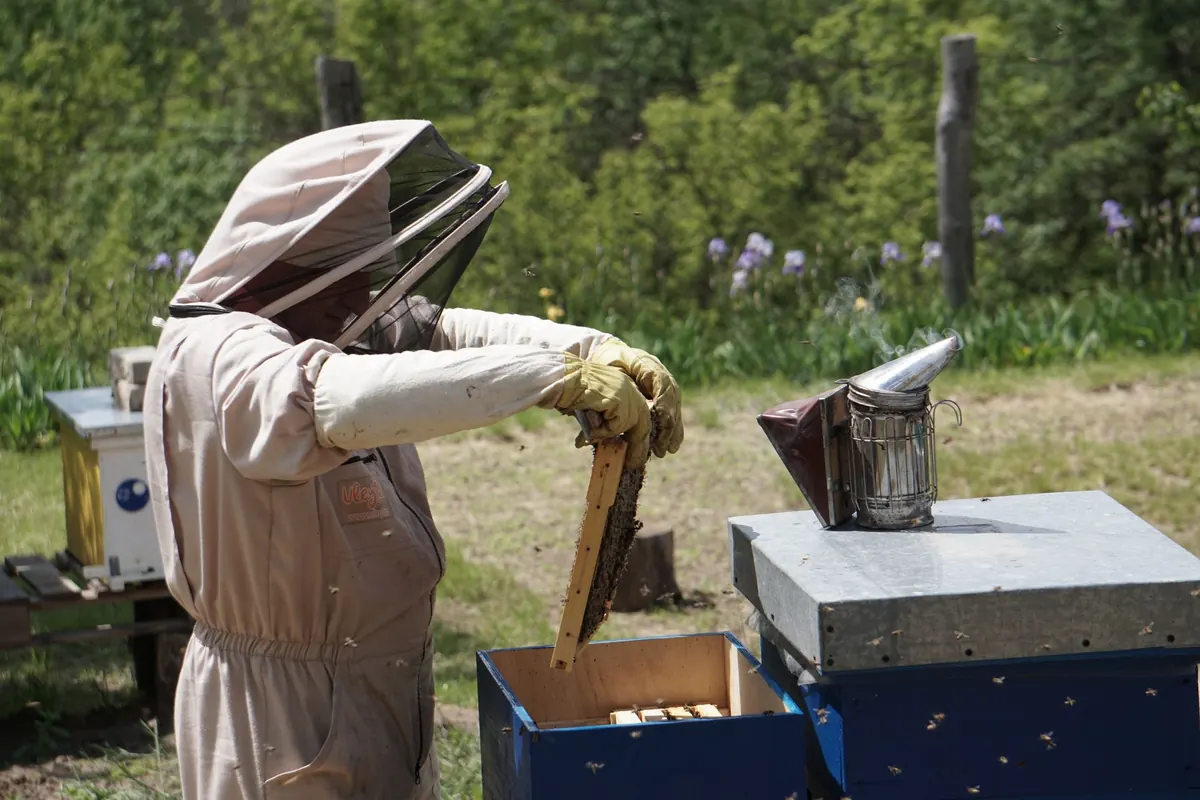
This is where daily experience diverges most. National frames are short and easy to lift with one hand, even when capped and full. A Langstroth deep frame packed with stores is a genuinely heavy, floppy object, and if the foundation is not well wired, comb can sag or break away as you tilt it. Good wiring and gentle handling matter more on Langstroth.
Inspection rhythm differs too. Because each Langstroth box holds more comb, you lift fewer boxes to see the same amount of brood — but each lift is heavier. Nationals mean more boxes, more lifting, and lighter loads. Which is easier depends on your back and your patience.
A few habits help on either format:
- Take the outermost frames out first and lean them against the hive. It lightens the box and gives you space to slide frames aside rather than lever them up.
- Keep the hive stand at a height where you are working with straight wrists and a straight back, not stooping.
- Use a spare empty box on a trolley as a work surface, so removed frames never go on the grass.
Cost, Spares and Availability
National has the home advantage. Cedar and poly boxes, crownboards, Ashforth feeders, queen excluders and runners are all off-the-shelf items from British suppliers, and the second-hand market is deep. If you need a brood box in a hurry, or want to borrow a spare from the apiary next door, National is usually the format that makes it easy.
Langstroth kit can work out cheaper per box, particularly on imported flat-pack deals, but you may pay for it in shipping, waiting time and hunting for odd parts. Prices shift constantly, so check current supplier listings rather than trusting a forum post from three seasons ago. The sensible rule is to buy the format your nearest bulk supplier and your mentor both use. Compatible spares are worth more than a small saving on a single box.
Supers, Extraction and the Honey Crop
Hive type does not decide your honey crop — forage, weather, colony strength and swarm control do. But hive type shapes the work. National super frames are small, so you will handle and extract more of them for the same weight of honey, and you will add supers more often through a strong flow. Langstroth boxes hold more per box, which means fewer trips and fewer boxes on the hive.
Before committing to Langstroth, check your extractor. Many small hobby extractors are sized around National frames, and longer Langstroth frames — deeps especially — may not fit or may only run tangentially. It is an expensive surprise to discover in August. If you can, test a borrowed frame in the basket first.
Weight and Your Back
Neither hive is kind to a bad back once the supers are on, but the loads differ. A full National brood box of stores is heavy; a full Langstroth deep is heavier. Poly boxes shave off a useful amount of that weight on both formats, and if lifting is a genuine concern, poly is worth the extra cost.
Practical steps make more difference than hive choice: recruit a second pair of hands for brood box lifts, use a hive barrow for moving hives, consider medium or shallow boxes for supers rather than deeps, and split heavy work across two visits. A physiotherapist or your GP is the right person to advise if you have an existing back or shoulder problem — no hive design fixes that.
Choosing Well — Practical Steps
If you are starting from scratch, resist buying a full apiary in your first season. Instead:
- Handle both formats at your local association apiary before spending anything. Ten minutes with a Langstroth deep frame tells you more than any comparison table.
- Match your existing or intended equipment. Standardise on your extractor, feeders and spare boxes rather than mixing formats across one site.
- Start with two colonies in one format. Buy modestly, keep a spare brood box and a few spare frames, and build from there.
- Plan your brood management early — double brood or 14×12 on National, or medium supers and generous brood space on Langstroth.
- Keep formats separate. Colour-code boxes or store them in different stacks, and never mix top and bottom bee space within a single hive.
Plenty of beekeepers end up running both, usually because a swarm arrived in borrowed kit or a bargain came up at an auction. There is nothing wrong with that, provided you keep the parts apart and know which spare fits which hive. Choose one format, learn it properly through a full season, and the bees will handle the rest.
Photo: Dmytro Glazunov / Pexels