Varroa destructor is small, reddish-brown and built for a quiet life. It rides on adult bees, slips into brood cells just before they are capped, and reproduces out of sight while the pupa develops underneath. By the time you notice mites on a bee's back, the damage has usually been building for weeks — and it is not the feeding itself that finishes colonies off so much as the viruses the mites pass on, deformed wing virus in particular. Varroa is manageable, though. It needs a routine: count, decide, treat, check.
Why counting comes before treating
Treating every colony on the same date each year feels tidy. It is also how a lot of colonies get into trouble. Mite numbers vary enormously between hives a few metres apart, because bees drift, rob, and re-invade from neighbouring colonies that are not being managed. One hive in an apiary can be carrying several times the load of the box beside it.
Regular counts do two jobs. They tell you which colonies actually need treatment, and they tell you whether the last treatment worked. Skipping that second part is common and expensive: a colony can look perfectly healthy in October and be in serious trouble by March.
Signs that mites are getting ahead of you
None of these on its own is proof, but each one should send you to the monitoring tray or the sugar jar.
- Bees with shrivelled, twisted or missing wings, crawling on the ground near the entrance.
- Patchy brood, with uncapped cells and dead pupae as workers try to clear infected larvae.
- A colony that fails to build up in spring despite food, space and a laying queen.
- Mites visible on drone brood when you open a capped cell, or riding on the backs of adult bees.
- A steady trickle of reddish-brown specks on the tray under an open mesh floor.
Worth saying plainly: deformed wings, patchy brood and slow build-up all have other possible causes. Confirm with a count before you reach for a treatment.
How to count mites properly
You are sampling adult bees — specifically nurse bees from a frame carrying open brood, because that is where the mites on adult bees are concentrated. Take your sample from the same sort of frame each time so the numbers are comparable.
The sugar roll
Half a cup of bees, roughly 300, shaken in a jar with a couple of tablespoons of icing sugar. The sugar dislodges the mites; you shake them out through a mesh lid onto a white tray and count them. The bees go back into the hive, dusty but alive. This is the method most beekeepers settle on.
The alcohol wash
The same sample size, but the bees are killed. It is more accurate, and some beekeepers use it when they want a definitive figure. If you keep bees for pleasure, a sugar roll is usually enough.
The monitoring tray
Counting the mites that fall naturally onto a tray over a week is free and gives a useful trend, but it undercounts badly and depends on how much brood is sealed at the time. Useful, not decisive.
Whichever method you use, check the queen is not in your sample before you shake, and write the result down. A number in a notebook beats a vague memory of "seemed fine".
Timing: the two windows that matter
The critical treatment window is late summer and early autumn, once the honey is off. That is when the colony is raising the bees that will carry it through winter. If those bees emerge already damaged by virus, the colony goes into the cold months short-lived and vulnerable.
The second window is midwinter, when a colony often has no sealed brood at all. That is the ideal moment for treatments that only reach mites on adult bees.
Brood breaks — from swarming, from an artificial split, or from caging the queen — create the same opportunity in the middle of the season.
Choosing between oxalic, formic and thymol
Each does a different job. The skill is matching the treatment to what the colony is doing at the time.
Oxalic acid
Reaches only the mites on adult bees, not those tucked inside capped cells, so it belongs in a broodless period. Dribbled as a solution or vaporised with a sublimator, it is cheap and effective when the timing is right and disappointing when it is not. It is corrosive: gloves, eye protection, and follow the label exactly. Avoid it if the colony is already stressed or short of stores.
Formic acid
The vapour penetrates wax cappings, so formic acid reaches mites reproducing inside sealed brood and can be used while the colony is still rearing. That is its great strength and its complication: it is temperature-sensitive. Too cool and it will not evaporate properly; too warm and it can harm brood and queens. The fumes are sharp, so protect your eyes and lungs, keep children and animals away, and never improvise a delivery method.
Thymol
Slow-release gels and pads based on thyme oil. Thymol needs warmth to evaporate, which makes late summer and early autumn its natural slot. Bees may beard outside the entrance and the queen may slow her laying for a week or two. It is normally used across a brood cycle so that mites emerging from cells are exposed. Not one for use with honey supers in place.
Whatever you choose: take supers off unless the label says otherwise, respect withdrawal periods, dose according to colony strength, and do not stack treatments or run them beyond the recommended course. Products and approvals differ between countries, so check what is authorised where you keep your bees.
Other tactics worth having
- Pull a couple of frames of drone brood during the season and remove the sealed cells — mites prefer drones.
- Use brood breaks, from splits or queen caging, to leave mites exposed.
- Rear from stock that shows hygienic or mite-resistant tendencies.
- Clean tools and gloves between hives and keep notes for each colony.
A routine that works
Keep it simple and repeatable. Count in spring to set a baseline. Count again in late summer and treat any colony above the threshold your local association recommends — commonly quoted figures sit around two or three mites per hundred bees from a wash or sugar roll, but use the guidance for your own area. Re-check three or four weeks later to confirm the treatment knocked the numbers down. Record everything, because patterns only show up across seasons.
If any of these treatments are new to you, ask an experienced beekeeper at your association to talk you through the first one. Labels are legal instructions, not suggestions, and getting the dose and timing right matters far more than owning expensive kit. Varroa rewards attention and punishes assumptions — but a colony that is monitored and treated on time will generally repay you well.
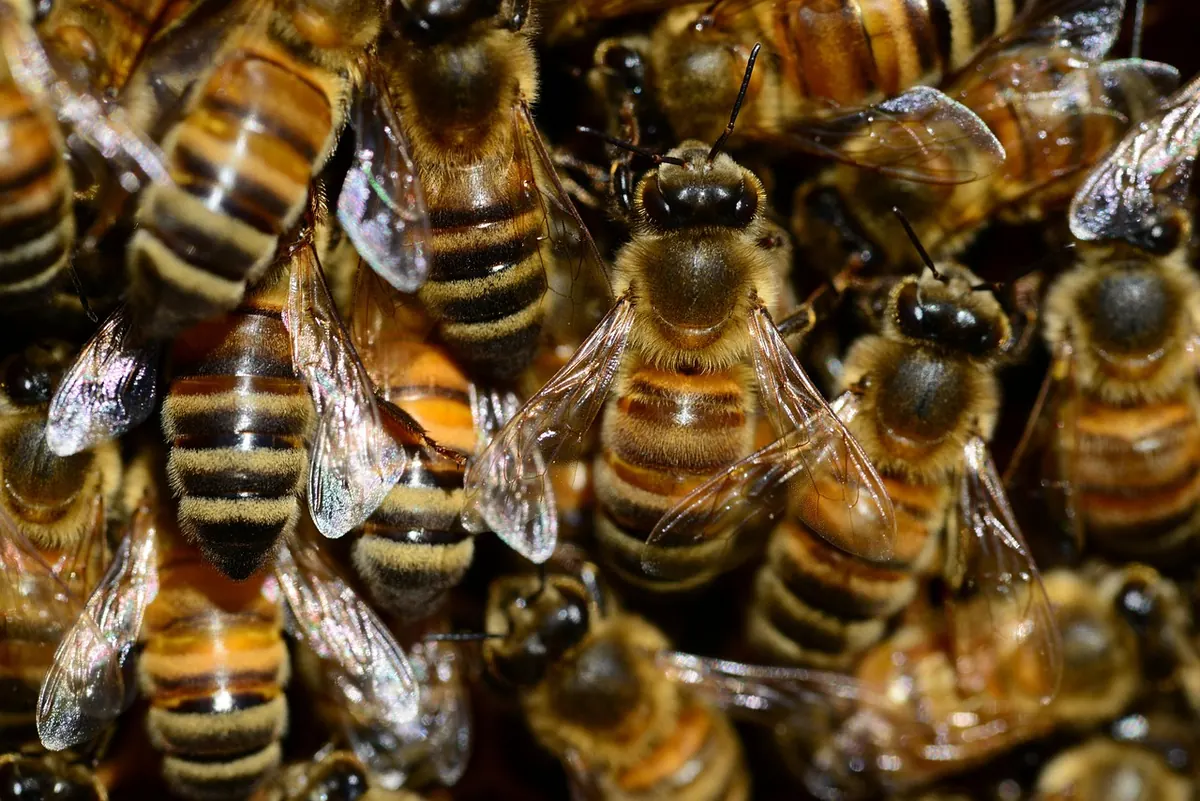
Photo: PollyDot / Pixabay